
Winter break is the perfect time to relax, recharge, and enjoy some well-deserved time off before heading off to college. But between holiday plans and catching up on sleep, why not use a little of that free time to prepare for your next big adventure? Here are some essential skills to master over winter break that will help you feel more confident, prepared, and ready to take on college life!
1. Master Basic Cooking Skills
You might have a college dining plan, but there will be times when you want a quick meal in your dorm room. Maybe the dining hall is closed, you're studying late, or you simply don't feel like walking across campus in the cold. Knowing how to prepare a few basic meals can save you time and money.
Start by learning how to make easy options such as:
- Microwave oatmeal with fruit and peanut butter.
- Rice bowls with canned beans and frozen vegetables.
- Simple sandwiches or wraps.
- Microwaveable soup or pasta.
- Yogurt parfaits with granola and fruit.
Before buying appliances, check your college's residence hall rules to see what cooking equipment is allowed.
Your Turn! Challenge yourself to plan a few meals using a small grocery budget. Look for ingredients you can use in multiple recipes, compare prices, and learn how to store food safely.
2. Learn How to Manage Your Money & Banking

Does checking your bank account ever make you nervous? You're not alone. Managing money can feel intimidating when you're first responsible for your own spending.
Try tracking your spending for a week. You may be surprised by how quickly small purchases add up.
Start by learning how to:
- Check your account balance and review recent transactions.
- Recognize deposits, withdrawals, and pending payments.
- Create a basic monthly budget.
- Deposit a check using your bank's official mobile app.
- Write a paper check, even if you rarely need one.
It's also important to understand the difference between a debit card, which generally draws money from your bank account, and a credit card, which involves borrowing money that must be repaid.
If you receive a paper check, learn how mobile deposits work and when the funds will be available. Never assume a deposit is immediately accessible.
For more tips on managing your money in college, check out our student finances factsheet!
3. Develop Strong Time Management Skills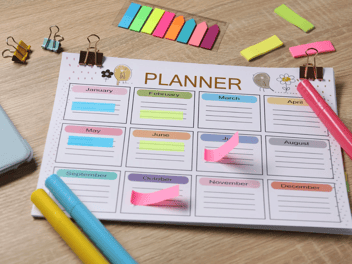
January 1 is the perfect opportunity to start a new calendar and build better organizational habits before college begins.
In high school, teachers and parents may remind you about upcoming deadlines. In college, you'll often be responsible for remembering assignments, exams, appointments, and meetings yourself.
One especially useful habit is working backward from deadlines. If a paper is due Friday, schedule time earlier in the week for research, writing, and editing rather than leaving everything until Thursday night.
Remember to leave room for unexpected tasks. Your calendar should help you manage your life, not fill every minute of it.
Your Turn! Choose one calendar system you will actually use. It could be a paper planner, Google Calendar, or Apple Calendar. Start by adding important dates and practicing how to schedule your time. Instead of writing "study for biology," for example, block out 45 minutes on Tuesday afternoon for reviewing your notes.
4. Build a Functional College Wardrobe
College may mean hoodies, sneakers, and comfortable clothes most days. But you might also need something appropriate for an internship interview, career fair, scholarship meeting, or professional presentation.
Before buying a new wardrobe, take a look at what you already own.
Ask yourself:
- Do I have an outfit suitable for an interview?
- Do I have something appropriate for a presentation?
- Do my shoes and clothes look clean and presentable?
- Do I know how to care for my clothes?
You may already have everything you need. A simple button-down shirt, blouse, sweater, dress, or pair of tailored pants can work well in many professional settings.
Choose an outfit, try it on, and make sure it fits comfortably. You could even take a photo so you know exactly what to wear when an opportunity comes up.
While you're at it, learn basic laundry skills. Practice reading clothing labels, selecting the appropriate washing cycle, measuring detergent, and folding or hanging your clothes.
Your Turn! Put together one interview-ready outfit and complete a load of laundry independently. You don't need expensive clothes to look professional. You just need to be prepared.
5. Strengthen Your Note-Taking 
College lectures can move quickly, and professors may expect you to identify the most important information without writing down every word.
Winter break is a great time to experiment with different note-taking methods.
Try the outline method, which uses headings and bullet points, or the Cornell method, which separates notes from keywords and review questions. You can also use concept maps to connect ideas visually.
Learning a few shorthand symbols can help you take notes more efficiently. For example:
- w/ means with.
- → means leads to or results in.
- ↑ means increase.
- ↓ means decrease.
- ex. means example.
The key is to develop a system you can understand when you review your notes later. Taking notes is only half the process. Afterward, spend a few minutes summarizing the main ideas and testing yourself on what you learned.
Your Turn! Watch a 10–15-minute educational video, take notes, and then write down the three most important things you remember without looking at the screen. This simple exercise can help you discover which note-taking methods work best for you.
6. Create a Professional Online Presence

You may think LinkedIn is something to worry about after graduation, but college is a great time to start building your professional presence.
You don't need years of work experience to create a profile. School projects, volunteer work, part-time jobs, clubs, and leadership activities can all demonstrate useful skills.
Start with a clear headline, your education, a short introduction, and any relevant experience. As you progress through college, you can add internships, research projects, campus activities, and new skills.
You can also connect with teachers, mentors, and people you know professionally. Focus on genuine connections rather than simply collecting contacts.
Remember to review your privacy settings and avoid sharing unnecessary personal information.
Your Turn! Spend 30 minutes creating or updating your LinkedIn profile. Add one meaningful experience and write a short introduction about your interests.
7. Understand Professional Email Etiquette

Texting your friends is one thing. Emailing a professor or potential employer is another.
In college, you may need to ask about an assignment, schedule an advising appointment, or follow up on an internship application. Knowing how to write a clear, professional email can make these interactions much easier.
A good email includes:
- A specific subject line: "Question About the Biology Assignment" is more useful than "Question."
- A polite greeting: "Dear Professor Smith" is a good starting point.
- A clear message: Explain who you are and why you're writing.
- A specific request: Make it easy for the recipient to understand what you need.
- A professional closing: Use "Thank you" or "Best regards," followed by your name.
Keep your message concise, proofread before sending, and remember to attach any documents you mention. If you don't receive a response immediately, give the person a reasonable amount of time before following up.
Check out more tips on perfecting your email etiquette.
You don't need to master everything before move-in day. You'll continue learning throughout college, and making mistakes is part of the process.
The goal is to arrive on campus feeling a little more confident, a little more independent, and better prepared to handle whatever comes your way.